
If you run any kind of content-focused business, there’s a good chance you’ve got a digital download somewhere in your lineup.
Maybe it’s an ebook opt-in you use to collect emails, a Canva template that turned into an unexpected bestseller, or a workbook that bundles nicely with one of your more in-depth guides.
It probably sells too. Digital products like these have built real businesses for creators in just about every niche you can think of. But they don’t all perform or profit the same.
When we looked at what types of digital downloads are actually generating the most revenue for creators in 2026, here’s how the top formats ranked:
- Online Courses & Educational Content
- Digital Printables & Templates
- Software & Plugins
- Memberships & Subscriptions
- Digital Art & Design Assets
Online courses came out on top. But why? What is it about the course format that buyers respond to? What do courses deliver that other digital products don’t?
In this article, we take a closer look at what’s really going on—how courses are designed to hold attention, encourage follow-through, and deliver outcomes people can actually use—and how all of that plays into how well they sell.
1. Courses Sell Transformation
When someone is looking at educational content, they’re not shopping for information. Information is everywhere. What they want is a clear path from where they are now to who they want to become. For example:
A better photographer.
A more confident speaker.
Someone who actually understands how to run Facebook ads.
Courses are built to deliver exactly that. Each module introduces a new concept or skill, and by the time students move to the next one, they’ve already changed a little.
Lesson by lesson, they’re building on what they just learned, stacking new abilities on top of what they picked up before.
By the time they finish, the transformation is real—they walked in as one person and walked out with skills they can apply immediately.
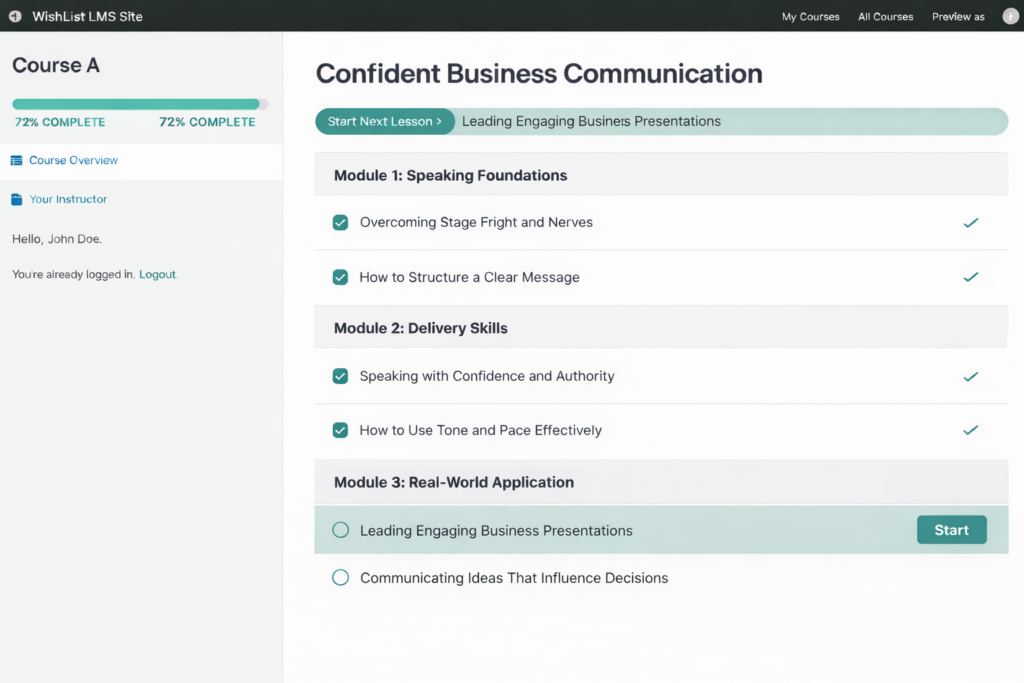
WishList LMS supports this with built-in progress tracking that lets students see exactly how far they’ve come. There’s something motivating about watching yourself move from Module 1 to Module 6.
It’s visible proof of growth, and that momentum keeps students engaged all the way through.
💡 Here’s a Tip: This is also where social proof becomes incredibly valuable. Sharing (or visually showing) before-and-after results from real students on your pricing page gives potential buyers a concrete picture of what’s possible—and proof that it’s achievable.
2. Courses Create an Experience
Transformation doesn’t happen from passively reading through lesson after lesson or watching video after video. It happens when students actively engage with the material—when they have things to do, places to participate, and tasks to come back and complete.
A well-built course gives students a structured experience filled with moments of required engagement, including:
- Quizzes – Add checkpoints that ask students to prove they understood the material before moving on. Throw in a few multiple-choice questions or short answers at the end of a module to confirm they actually absorbed what you just covered.
- Assignments – Give students a task where they create something based on what they learned. Ask them to build their own email sequence, design a landing page, or record a short video. Have them submit the finished work so you can provide feedback or use it as a gate before they move forward.
- Essays – Add prompts that ask students to think through a concept and explain it in their own words. Something like “describe how you’d apply this strategy…” pushes them to work through their thinking on paper.
Then there’s a community layer you can add in too. When students have access to a membership space where they can ask questions, share progress, and connect with others going through the same material, they’re not learning in isolation—they’re part of something.
WishList LMS lets you build all of this into one cohesive experience where students can move through engaging lessons, complete the work, and connect with others going through the same thing—all without leaving your WordPress course platform.
3. Courses Reach More Types of Buyers
People learn differently. A PDF works for people who like to read. A video tutorial works for people who learn by watching. A template works for people who want to skip straight to doing.
The problem with selling any single format is that you’re only speaking to part of your potential audience. Everyone else looks at the product and thinks, “That’s not how I learn“, and moves on.
Courses don’t have that limitation. You can upload video lessons for the watchers, written guides for the readers, worksheets for the hands-on learners, audio files for those learning on their commute, and templates for the people who just want to plug in and go.
WishList LMS lets you build in different lesson materials naturally. Whether you create courses in one format or blend multiple formats into a full program depends on your teaching style and how you want to deliver your content.
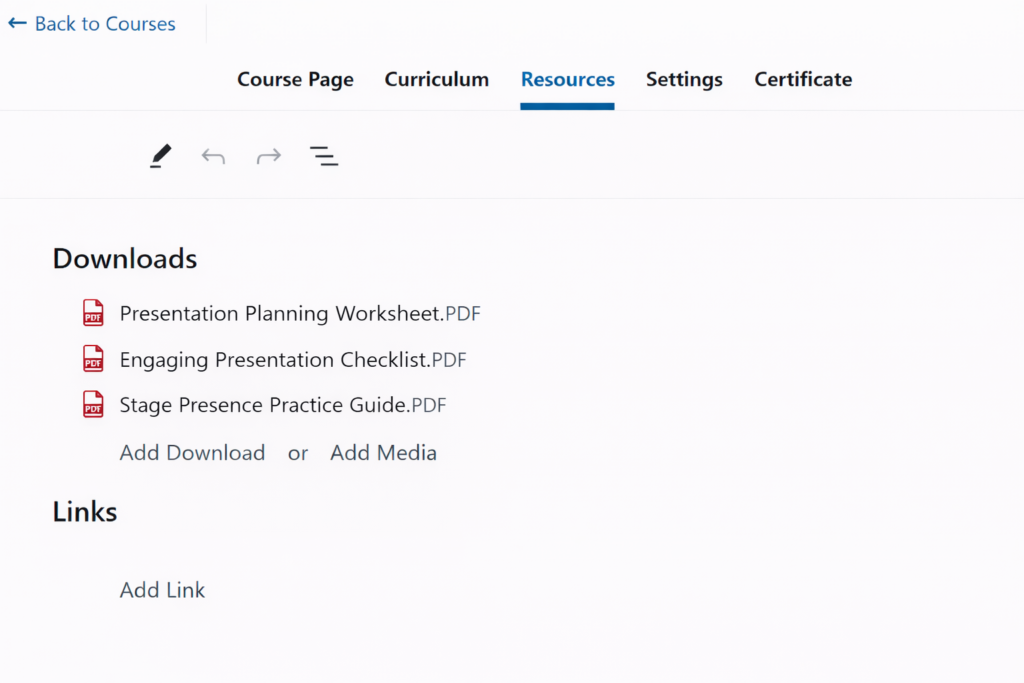
When your course supports the ways your students actually learn, you’re not asking them to adapt to your format. You’re meeting them where they already are—with every format they need built into the same curriculum.
One product, multiple entry points.
4. Courses Create a Commitment Worth Keeping
Who else has opted into a free download just because the title looked promising…only to let it disappear into your inbox? Maybe you opened it once, skimmed the first page, then forgot it existed entirely. 🙋♀️
That’s the problem with one-and-done products. There’s nothing pulling students back. That’s why there’s a reason people pay for things like gym memberships and streaming subscriptions—they want ongoing value, not a single transaction they’ll ignore by the second week.
Courses tap into that same psychology, where enrolling creates a commitment. There’s a first lesson, a next lesson, a module to complete. Momentum builds because the format itself is designed to build it.
And when you structure your curriculum to unfold over time, that momentum sticks. WishList LMS makes this easy with drip content—lessons release on a schedule you control, giving students a reason to return week after week instead of binging everything and bouncing.
- Week 1: Students log in and see the new module waiting. They watch the lesson, read the supporting material, and take notes.
- Week 2: There’s an assignment due—a chance to apply what they just learned while it’s still fresh.
- Week 3: A student shows up for a scheduled one-on-one with their instructor to ask questions, get feedback, and map out the week ahead.
With a sequence like that, students aren’t deciding whether to come back—they’re following a schedule that requires them to. And they do.
5. Courses Support Certification and Credentials
In a lot of industries today, what someone knows matters less than what they can prove they know.
Hiring managers skim resumes looking for credentials. Promotion committees want documented professional development. Clients deciding between two consultants check LinkedIn for certifications.
Knowledge alone doesn’t show up on paper—but a completed course with a certificate does.
For buyers, that changes everything about what they’re purchasing. They’re not just buying a course to learn something—they’re earning something. A credential they can attach to their name. Proof that follows them into job interviews, client conversations, and promotion discussions.
For career changers, this is especially powerful. “I’ve been studying UX design” sounds like a side interest. “I completed a UX certification program” sounds like an intentional career move or a serious step toward a stronger role.
And for professionals in fields that require continuing education (i.e financial advisors, therapists, coaches, healthcare workers), accredited courses are how people maintain licenses and stay qualified to practice. If your expertise serves those industries, the credential becomes a core reason buyers enroll.
That means your certificate needs to deliver. It should look professional, feel legitimate, and be easy for students to use the moment they earn it. WishList LMS lets you create exactly that—certificates students actually want to show off.
Add your branding, customize the design, and include verification details that prove the credential is real. Students can download them and share directly to LinkedIn, add them to a portfolio, or attach them to a resume—wherever credentials carry weight.
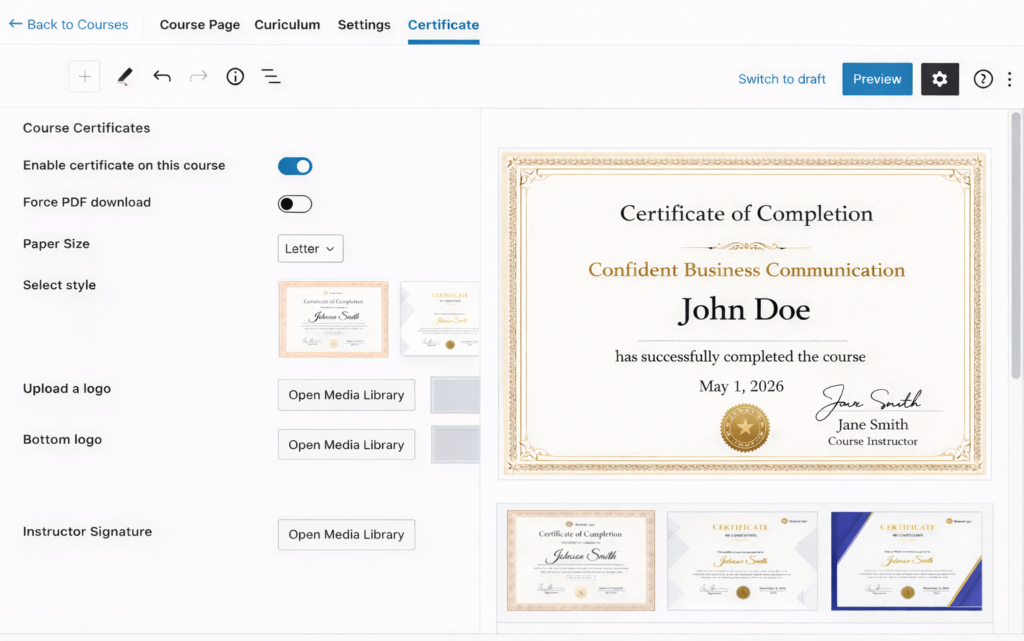
So when students finish your course, they’re not just walking away with new knowledge. They’re walking away with something they can hold up and say: I did this. Here’s the proof.
Ready to Build a Course That Sells?
You already have the expertise people want. Now the question is: how do you package it?
An ebook might be easier to create, but it’s also easier to ignore. A video tutorial might explain a concept, but it doesn’t make sure anyone understood it. A template might solve one problem, but once it’s used, there’s no reason to come back.
Courses play a different game entirely.
When you build a course, you’re creating something people actually enroll in—a commitment they make to themselves, a path from where they are to where they’ve been trying to get, and proof they can hold up when they arrive.
You have something worth teaching—and WishList LMS gives you everything you need to teach it well.
Build your curriculum with progress tracking that keeps students moving, drip schedules that bring them back each week, quizzes and assignments that deepen engagement, and certificates they’re proud to share. All on your own WordPress site, fully under your control.

Leave a Reply